Artificial intelligence is reshaping more than the technology industry. It is rapidly changing how investors value the electric grid. Here’s how.
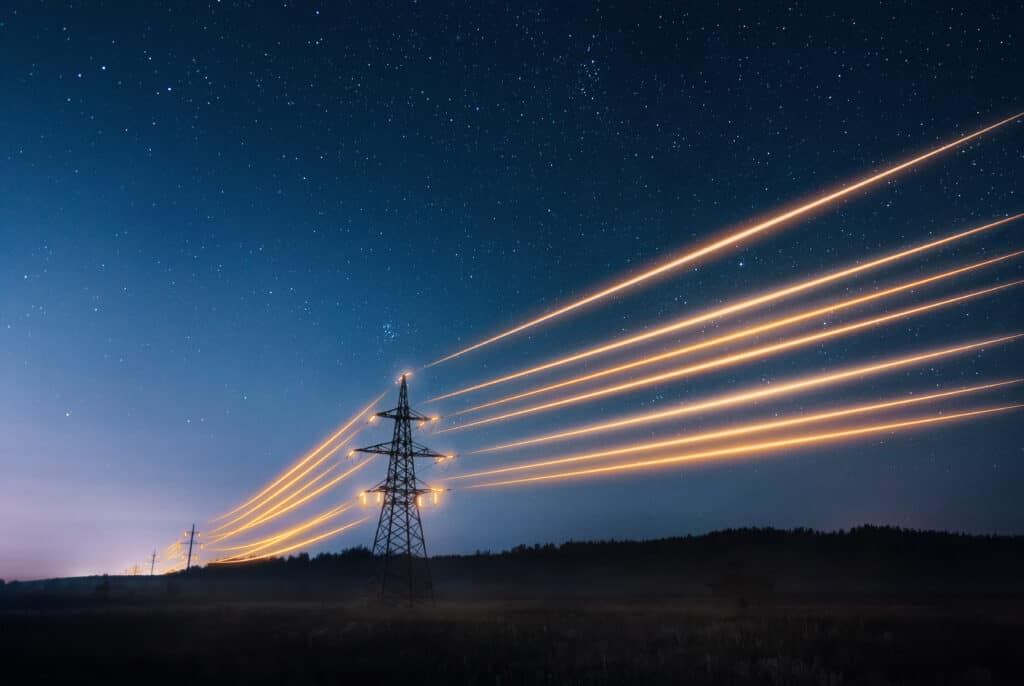
One of the hottest fundraising trades in private markets isn’t software, healthcare or private credit. It’s electricity.
Infrastructure managers are drawing investor capital at a time when much of private equity remains mired in a sluggish fundraising environment. Their pitch is built around a powerful macroeconomic shift: North American electricity demand is expected to grow at its fastest rate in half a century. AI data centers, electric vehicles and new manufacturing facilities are placing unprecedented strain on the power grid.
The result is a fundraising boom for infrastructure managers that own the power plants, transmission lines and grid assets needed to keep the lights on—a rare bright spot in private markets as many buyout firms struggle to attract new capital.
These firms are also generating outsized returns by flipping gas-fired power plants to electricity producers.
Institutional investors are increasingly treating infrastructure as a core portfolio allocation rather than a niche alternative investment.
That shift helped push global infrastructure fundraising to a record of nearly $200 billion in 2025, exceeding the previous high reached in 2022, according to McKinsey & Co.
The asset class has been one of the rare winners in private markets, posting steady fundraising growth while buyout and real-estate funds have struggled to maintain momentum.
Few firms illustrate investors’ growing appetite for the sector more clearly than LS Power, the New York-based energy shop that former Soviet Union Department of Energy engineer Mike Segal founded in 1990.
LS Power is targeting $4 billion for its sixth flagship fund after raising $2.7 billion for its previous, oversubscribed fund less than two years ago, according to investment documents prepared for the Arkansas Teachers Retirement System.
The firm’s fundraising efforts are bolstered by a track record of delivering a 26 percent net IRR and a 2.7x net multiple across its five previous flagship funds since 2005, according to a Pennsylvania State Employees’ Retirement System memo.
LS racked up a $12 billion exit last year when it sold power-generating assets to NRG (NYSE: NRG).
The firm’s investment thesis centers on a contrarian read of the energy transition. Rather than betting primarily on the development of new renewable generation, LS Power and a growing cohort of infrastructure investors are targeting assets already operating on the grid.
That’s because North American power demand is surging, but adding new supply remains difficult. Interconnection queues stretch for years across many markets, government permitting timelines continue to lengthen and equipment shortages have pushed up development costs.
That dynamic has transformed existing power infrastructure into one of the most sought-after asset classes in private markets. Operating power plants, transmission networks and grid-connected energy assets are increasingly viewed as scarce resources capable of benefiting from rising demand and limited new supply.
Across the industry, infrastructure managers are expanding their exposure to power markets. Energy Capital Partners has built much of its recent investment strategy around the intersection of power generation and data-center demand. Brookfield (NYSE: BN), Blackstone (NYSE: BX), KKR (NYSE: KKR) and EQT (NYSE: EQT) have all identified electricity infrastructure and digital infrastructure as major investment themes as AI reshapes long-term energy forecasts.
Institutional investors say the sector offers something increasingly rare in private markets: a combination of defensive cash flows and secular growth.
Contact Segal at [email protected].