PE Firms often talk about creating value through operational improvements. Few can point to a factory down the road building robots to do it.
MiddleGround Capital’s in-house robotics factory shows how buyout firms are increasingly turning to automation and manufacturing expertise to drive portfolio-company performance.
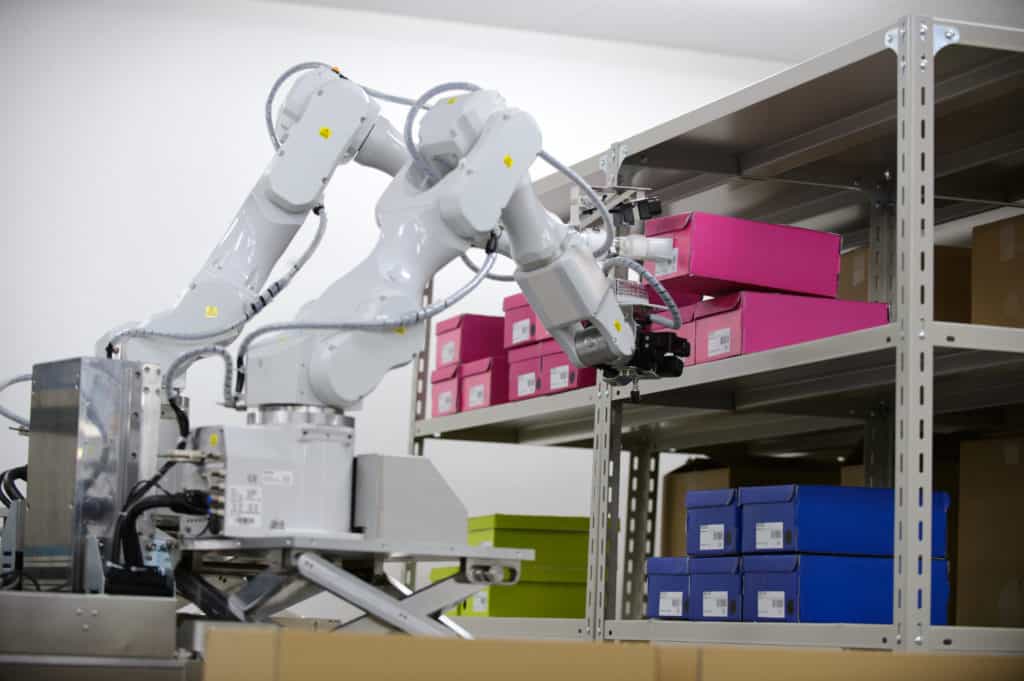
Lexington, Ky.-based MiddleGround Capital, which focuses on industrial and manufacturing businesses, owns and operates a robotics and automation business that designs and deploys collaborative robots — or cobots — across its portfolio companies. Staffed by MiddleGround employees rather than outside consultants, the operation has become one of its most distinctive value-creation tools, manufacturing other automated equipment beyond the robots.
“They have a surprising number of applications,” says MiddleGround founding partner and COO Scot Duncan. “We have installed them in multiple portfolio companies.”
The idea emerged during the Covid pandemic, when manufacturers struggled to find workers amid a shift toward higher-paying and work-from-home jobs.
“We were more worried about finding enough workers than trimming headcount,” says Duncan, a trained engineer.
Most of the automation team’s roughly dozen employees were recruited from a nearby Toyota plant, where Duncan and co-founder John Stewart first met. Stewart later recruited Duncan to turnaround manager Monomoy Capital Partners to lead operations before the pair, along with Monomoy executive Laura Mulholland, launched MiddleGround in 2018 with a $400 million debut fund. The firm now manages roughly $4 billion.
That operating-intensive approach so far has produced mixed but positive results about halfway through the life of its second fund in a challenging private-equity market.
MiddleGround’s second flagship fund closed in 2021 at $802 million, exceeding its $550 million target. So far it has generated a 7.72 percent net internal rate of return through the first quarter of 2026, according to the Kentucky Public Pension Authority (KPPA). KPPA reported that MiddleGround’s debut fund, which closed on $460 million in 2019, has an IRR of 13.51 percent so far.
A MiddleGround spokesperson said the firm’s operating strategy is intended to create value over time, noting that productivity gains and automation investments are not immediately reflected in fund-level performance.
| Fund | Size | IRR To Date |
| I (2019) | $460M | 13.51 |
| II (2021) | $802M | 7.72 |
| Mobility (2021) | $250M | N/A |
| KPPA Co-invest | $37.5M | 11.17 |
The firm also raised $250 million in 2021 for its Mobile Opportunity Fund, an overflow vehicle that invests in automotive companies alongside its flagship fund.
MiddleGround also reported in 2021 that 24 LPs committed $280 million in no-fee, no-carry co-investments alongside the three funds.
“We are not a pure turnaround play,” Duncan says. “While we can buy a company to turn around, we mostly concentrate on good businesses that need help going to the next level.”
Companies where automation can quickly improve productivity are especially attractive acquisition candidates.
“We search for those automation opportunities,” Duncan says.
The approach illustrates a broader shift across private equity. For decades, many buyout firms generated returns through leverage, multiple expansion and falling interest rates. Today, sponsors face a tougher environment marked by elevated borrowing costs, slower deal activity and a stubborn exit market.
According to Bain & Co., buyout-backed exits totaled roughly $468 billion in 2025, while the industry sits on nearly $3 trillion of unsold assets. With exits taking longer and valuation gains harder to achieve, firms are increasingly focused on improving operations inside portfolio companies.
That trend has elevated operating partners from support personnel to central figures in investment strategies. Firms including KKR (NYSE: KKR), Blackstone (NYSE: BX), Apollo Global Management (NYSE: APO) and Clayton, Dubilier & Rice have built large teams of executives, supply-chain specialists and procurement experts tasked with driving earnings growth at portfolio companies.
MiddleGround has taken the concept a step further.
One example came at Race Winning Brands, a portfolio company that manufactures automotive and powersports components. At a Detroit-area facility, workers manually handled push rods during a heat-treatment process, holding them in induction heaters until they glowed red, then transferring them to cooling stations. The work was repetitive, low-value and posed safety risks.
MiddleGround engineers built an automated system consisting of a robotic arm and hopper capable of processing hundreds of parts at a time. The installation removed workers from a potentially hazardous task, reassigned them to more productive roles and increased throughput.
The robotics operation reflects MiddleGround’s roots in Toyota’s manufacturing culture. Several senior executives spent years at the automaker, where they were trained in lean manufacturing, continuous improvement and the Toyota Production System.
That background shapes how the firm evaluates investments. Rather than focusing solely on valuation, executives assess where production bottlenecks can be removed, labor productivity improved and automation deployed. In some cases, specific operational improvements are identified before a deal closes and incorporated into the investment thesis.
The strategy mirrors a broader evolution in private-equity value creation. Research from Bain, McKinsey and other advisers has found that operational improvements and revenue growth account for an increasing share of buyout returns, while the contribution from leverage and multiple expansion has declined.