Driven by federal tax credits, subsidies and customers’ ESG demands, turning waste into natural gas is gaining momentum and attracting substantial investments from energy giants, PE titans and small shops alike. New York-based Warburg Pincus’ newly formed renewable natural gas (RNG) platform Viridi Energy Management had a busy dealmaking 2023 and has six more deals nearing completion.
“Sustainability is here to stay,” says Viridi president Chet Benham, voicing the investment thesis of most players in the RNG sector. “The move to decarbonization is here to stay.”
Warburg Pincus and New York-based Green Rock Energy Partners launched Viridi in 2022.
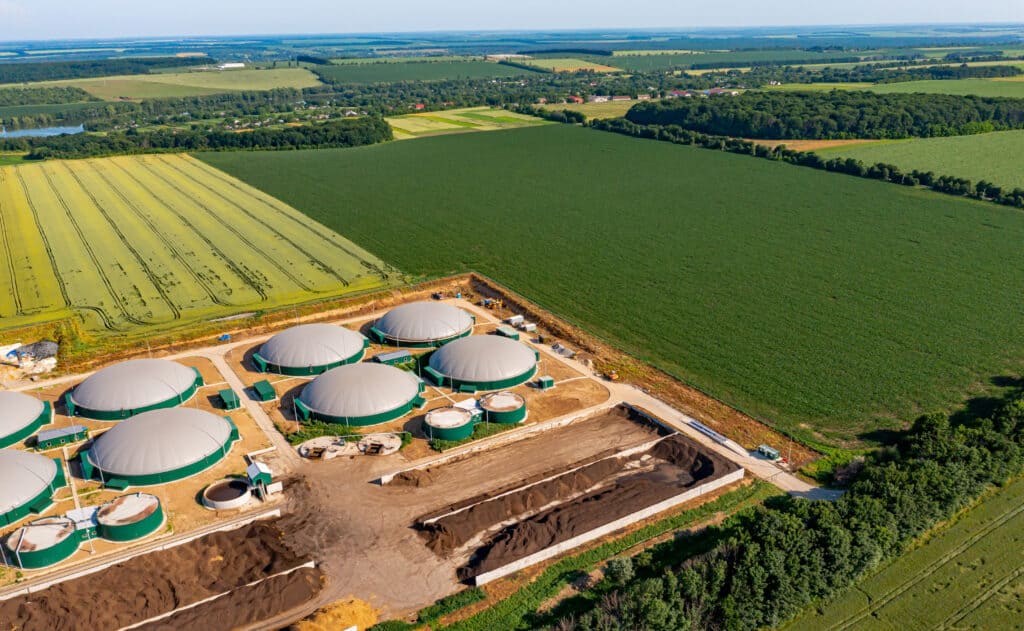
The $320 million investment has helped Viridi build four plants, known as digesters, to turn organic waste emissions into pipeline-ready natural gas. Viridi has set up facilities in landfills in Wisconsin, Alabama and Maine. It also struck a deal last year with American Organic Energy to divert New York City grocery store food waste from landfills to Viridi’s processing plant.
Subsidies and credits provided by the Inflation Reduction Act, the federal Renewable Fuel Standards program, California’s Low Carbon Fuel Standard and several other federal and state regulations played a big role in attracting investment, most notably from big energy companies:
- Chevron (NYSE: CVX) partnered with Brightmark in 2020 to turn dairy farm emissions into natural gas. The joint venture announced a recent expansion to five farms in Michigan.
- Shell (NYSE: SHEL) bought Nature Energy Biogas in 2022 and in December of that year, BP (NYSE: BP) acquired RNG producer Archaea Energy for $3.3 billion.
- Canada’s largest pipeline operator Enbridge (NYSE: ENB) spent $1.2 billion last year to buy seven operating U.S. landfill gas-to-RNG facilities.
- Marathon Petroleum (NYSE: MRO) in 2023 acquired a 49 percent stake in LF Bioenergy.
“The entry into the market of those big players brought a momentum of its own,” Benham says.
Since 2022, several PE shops have jumped into the RNG game:
| PE FIRM | INVESTMENT | YEAR |
| Ares (NYSE: ARES) | Burnham RNG | 2023 |
| CIM Group | Terreva Renewables | 2023 |
| Apollo (NYSE: APO) | Composite Advanced Technologies Inc. | 2023 |
| Warburg Pincus | Viridi | 2022 |
| H.I.G. | Northern Biogas | 2022 |
| Green Rock Energy | Neu Energy, PSA South Hills Landfill Gas Venture | 2022 |
| BlackRock (NYSE: BLK) | Vanguard Renewables LLC | 2022 |
RNG captures methane emissions from biodegradable materials and turns it into pipeline-quality fuel that can be used in natural gas vehicles and other applications powered by natural gas. Producers obtain their “feedstock” from farms, landfills, food waste and other biodegradable sources and turn it into natural gas.
The niche fuel-producing sector is gaining mainstream acceptance as a “drop-in” substitute for natural gas extracted through drilling and fracking. Many natural gas customers and investors who make ESG a priority are turning to RNG, especially in the transportation market.
The U.S. Department of Energy’s Argonne National Laboratory estimates about 230 RNG plants are operating in the U.S., a 30 percent increase from 2020. Still, RNG production represents less than one percent of overall natural gas production, leaving room for growth.
“Regardless of the near-term tailwinds, the long-term outlook for RNG is about growth,” Benham says.
About 70 percent of RNG in the U.S. comes from landfills and 20 percent is derived from agricultural waste, mainly manure from dairy farms. The rest comes from food waste, spoiled products dumped by grocery stores and restaurants.
The Viridi business plan calls for contracting with local companies and farms for their organic waste and processing it to convert it to RNG.
Benham says sourcing projects comes down to developing relationships with local players to help identify farms, landfills and other “feedstock” sources to turn emissions into RNG. He says Viridi is deep into negotiations with six separate projects, which are all likely to close this year.
“We get to know the guy in the baseball cap driving the pickup truck,” he says. “We are monitoring several agricultural sites.”
Contact Benham at [email protected]